Civil resistance
Self-contained introduction
Civil resistance, institutional dependencies & repression
The Repression Trap
The streets are full. Why is the president still in power?
Lead a movement through five decisions about rallies, workplace refusals, repression and political offers. Track whose cooperation changes, sustain participants, and test the same move under a different outside-backing package. A promise, a leader’s departure and democracy are different outcomes.
The same political choices in both routes. You can switch inside without starting over. For class asks you to complete any missing required responses. Save a report in either route; your instructor decides what to accept.
For class: download your report when you finish, then submit it through your course website. Downloading does not submit it.
Choose Save + pause to keep a checkpoint in this browser. Autosave is optional. Download a progress JSON before changing devices or websites; a readable report does not restore progress.
What you can explore
- Distinguish public attention, movement endurance and enacted institutional noncooperation.
- Trace an actor, a dependency and a behavioral change while accounting for unequal costs.
- Explain contingent responses to repression and the scope of a one-episode support-package comparison.
- Separate promises, verified gains, leadership turnover, a negotiating opening and democracy.
YOUR CAMPAIGN FIELD KIT
Keep the reasoning.
Play online or download the self-contained game and teaching materials. Your first explanations and later revisions stay distinct.
- Offline game · HTML
- Complete teaching pack · ZIP
- Student guide · printable
- Teaching guide, rubric & debrief
- Sources & model scope
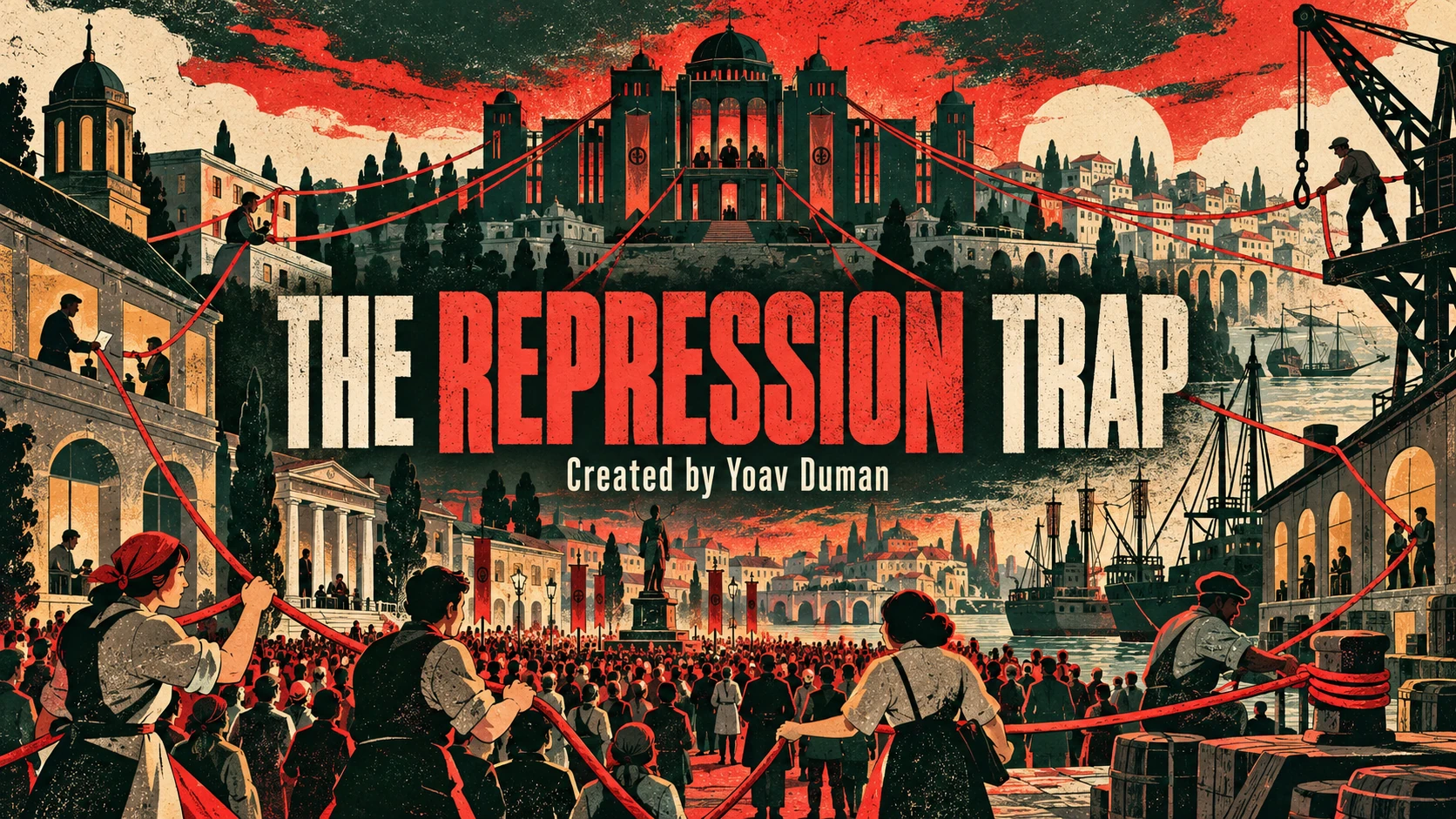
- Landscape cover artwork · WebP
Browser saves are separate on each website. Use a progress JSON to transfer your work. Exporting a report does not submit it.
What the model leaves open
Lydora, its events, people, indices and numerical relationships are invented. The replay switches a support package, not treasury finance alone. Reach combines attention and relationships. This short domestic scenario is not a model of occupation. Timing and learning effects require classroom piloting.
AFTERWARD, THINK ABOUT
Which institution changed what it did, and whose cooperation mattered?
Teaching this activity Debrief, assessment & assignment draft
Bring it back to the room
- Which institution changed what it did, and whose cooperation mattered?
- When did greater attention leave pressure unchanged, or a useful response coexist with a net loss?
- What did the changed-setting replay hold fixed, and which components remain inseparable?
- What was implemented or remains unconfirmed, and what would test a rival explanation?
What to assess
Assess the actor-dependency mechanism, specific evidence and its status, costs, a plausible rival with discriminating evidence, thoughtful revision and transfer. The writing-first report retains all original evidence and revisions. A favorable political ending and completion word floors are not learning grades.
Read the complete teaching guide →Syllabus description, rubric & printable companion →
Prepare an assignment to share.
Edit this text, then copy it into Canvas or your course website. These edits stay in this tab.
Syllabus description & discussion prompts
Syllabus description
Lead a movement through five decisions about rallies, workplace refusals, repression and political offers. Track whose cooperation changes, sustain participants, and test the same move under a different outside-backing package. A promise, a leader’s departure and democracy are different outcomes. Students produce field report with forecasts, first explanations, revisions, a changed-setting comparison and a transfer argument.
Questions for a discussion board or class debrief
- Which institution changed what it did, and whose cooperation mattered?
- When did greater attention leave pressure unchanged, or a useful response coexist with a net loss?
- What did the changed-setting replay hold fixed, and which components remain inseparable?
- What was implemented or remains unconfirmed, and what would test a rival explanation?